REVIEW: Jim Noir—Programmes For Cools (2026)

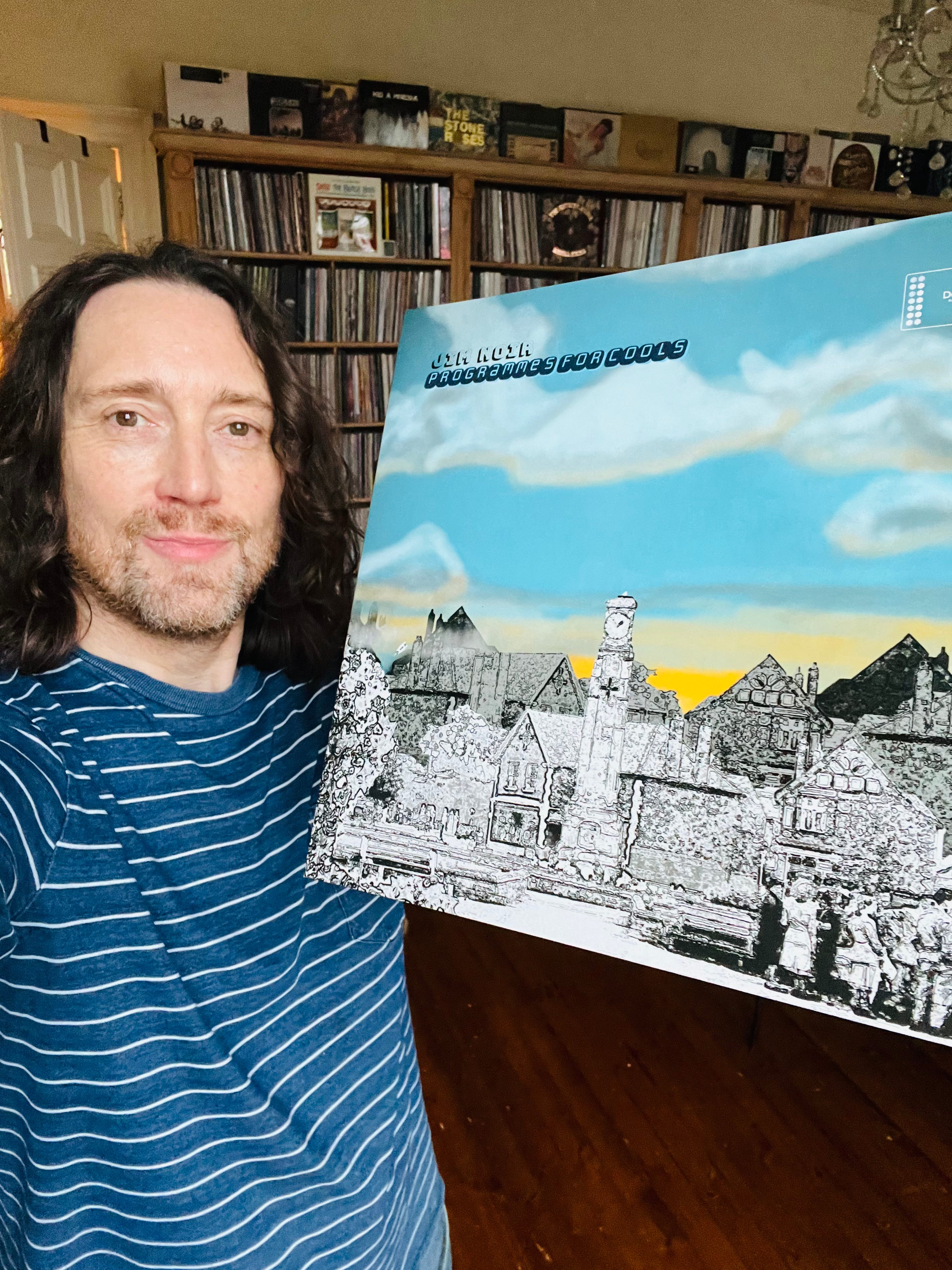
Ladies and Gentlemen, we have a new world record: It took 574 days between ordering Programmes For Cools and actually receiving it. Quite honestly, I’m just glad it is here, in my hands, because for a while it was touch and go.
It took about a year longer than was billed, because Jim, aka Alan Peter Roberts, is a perfectionist and worked tirelessly on getting it right, redoing the mix, crowdfunding the whole exercise multiple times, releasing a whole pile of EPs along the way to raise a bit more cash to get the project over the line. One them, the six-track Emergency EP, even came out last summer on vinyl, and you can read about that here. On top of that, he also pushed out a total of 18 EPs via Patreon and Bandcamp, essentially giving fans a warts and all glimpse into all the ideas he was coming up with.
He did this for Jimmy’s Show as well, so hence the idea was to repeat that “creative exorcism” again, selecting the best songs from that giant tranche of material—hence Jimmy’s Show 2. I like this level of transparency. Usually fans only get let in on what the work-in-progress stuff is like years or even decades after the fact. This less precious approach means we got to hear pretty much everything as it arrived, and also give our feedback on what was the best offerings as he went along.
This album is, if you like, his Greatest Hits of 2021 to 2025. But although the creative process was the same as the original Jimmy’s Show, giving it different title was probably wise, because stylistically they’re chalk and cheese. While Jimmy’s Show was a unabashed in its sunbaked late-60s psychedelia for most of it, Programmes For Cools has much more in common with his famed excursions into videogame soundtrack work (for those unaware, he worked on Media Molecule’s PS3 classic Little Big Planet).
That is to say, more synths and electronics, and a dialling down of the groovy guitar textures. On the one hand, boo, because his more guitar-based songwriting is top drawer—he is a massively underrated songwriter, quietly being brilliant. On the other hand, yay, because he deploys that retro-synth sound so well, avoiding the shininess that can come with that.
20-odd years into his career, he certainly hasn’t lost his knack for a timeless melody, and experimentation in sound and textures never comes second to making something hummable. One of the synthier numbers is Out Of Sight, a summery track he put on last year’s excellent Emergency EP. I’ve heard this song dozens of times since then, and it’s one of his poppiest tunes ever. Had this come out in 1985, I guarantee it would have gone Top 10, and we’d be speaking about it in hallowed terms, muttering They don’t make them like they used to. It turns out they do make them like they used to—we just have a horribly fragmented pipeline, completely unable to direct people to the best stuff anymore.
As if to say “you think that’s good—now hear this” we then get The Fountain, a solid gold funky pop banger, where he finds a way to straddle the decades with the squelchiest keyboard sound this side of mid-70s Stevie Wonder. It’s at once a keyboard monster of a tune, but also supplemented with some stank face crybaby guitar noodles, and some of the best disco drumming he could come up with. It’s interesting hearing the difference in the mix between the finished version and the original one from 2022. At once the same in performance, but radically punchier in its final form.
Once you’re aware of how much more he has coaxed out of the mix, you can’t unhear it, and it’s present across the album. These Are Things is another that synth-meets-guitar number that struts along, before unleashing his best Roddy Frame acoustic solo, before pressing the button marked “Air circa 1998 sounding keyboards” and finishing the job.
The feeling of filtered quality (“only the hits!”) comes through all the way along. I always think that bands in general need a better sense of quality control, rather than simply dishing up the best 12 of the 16 they recorded. Unless you’re literally The Beatles, that approach probably won’t work, and so often you’re left wondering why certain songs ended up being included. I guess Alan has the luxury of doing it all himself—every tiny bit—so has no-one else to answer to. If it’s not good enough, it gets thrown out, or he’ll finesse something until it is.
So while not every track here has single potential, he seeds the ones that aren’t to give the album a sense of ebb and flow. Longsword and Harum Scarum serve as mid-album anchors, taking the pace down a tad, floating downstream—only to go fooled you on the outro to the latter, busting out some chunky chords and pretty guitar runs to remind us he’s not bad on the old six string.
He also likes a good little synth instrumental, as if to demonstrate he’d be great at ad jingles, should anyone wish to hire him. The album kicks off with one (“Start"), then we get the beautiful Manchester Cat, the parping educational BBC theme tune circa 1977 (“Bit 42”), and one to bookend it all, appropriately called Close, which is brilliantly grandiose—proper closing ceremony music for an imaginary global sporting tournament. He even imagines what he’d do in Pink Floyd in the early 1970s on One More Hand. The answer? Exquisite soundscapes to drift away to.
Alan describes side B as “more esoteric,” which is a fair summary. He channels Music From The Spheres era Ian Brown on I Think I Found It, which is an unexpected place to end up, but he’s a Manc. He can get away with it. Fireworks goes for the “wooze of golden era Boards Of Canada” which is to say squelchy noises and that ambient heft, though I’m also going to say that Air’s fluttery prettiness once again finds its way into this one.
The album seems to enjoy winding down—and you will too. Morning Light is another one that takes us to the 70s, combining a Black Dog Led Zeppelin beat with some of Alan’s best guitar work, approximating several great 70s guitar gods all at once. Fair play. If you’re a fan of the more guitar-oriented Jim Noir, this is where it all goes off, and is where the album serves up its epic. Motorbike brings us all home, with an affecting instrumental first half, before a chorus of multilayered vocals finally come in. It’s bigger than all of us!
I get the distinct impression Alan threw absolutely everything into making this. It’s his Abbey Road—an album that takes the listener on a journey that he wants us to experience front to back, no skips allowed. “It’s been the hardest I’ve ever worked on anything”. He jokingly claims this will be the last Jim Noir album, but he always says this. If it really is, then he’s left us with his masterpiece. While he figures out what to do next, his alter ego The Dook has an album Avion Test Void up for pre-order, out April 20th, promising exotic electronica.


it's amazing that you can do so many thoughtful in depth reviews.
this one is great I really love how the sounds are changing every track.
thank you!